SaaS Marketing Was Built for Humans. AI Agents Don't Care.
AI agents are quietly rewriting how SaaS gets evaluated and bought. Why Perceived Trust is no longer enough — and why Calculated Trust is the new ground floor.
I'm entering the marketing industry at an interesting time.
The concepts I am learning are quietly being rewritten underneath it. Funnels, demo CTAs, reviews, hero copy. All of this was built around the most fundamental assumption; a human was the one consuming it.
That assumption will hardly be true in the coming years.
Traditional Sequences are Changing
SaaS marketing has traditionally followed an order. A person gets curious, searches, lands on your page, and eventually raises their hand. Awareness is the first step. Adoption comes after (ideally).
That order is seemingly being flipped.
AI agents are already being deployed inside large companies to evaluate software and recommend tools. They don't care about an emotional appeal or want to be given a tutorial on how you work. They are reading your documentation, testing your API quality, and forming an opinion before a human ever consciously entered the conversation; the human is just pulling the trigger.
According to G2's 2025 AI Agents Insights Report, 57% of companies already have AI agents in production. More than one in three companies say they would switch SaaS vendors specifically to acquire agent functionality. The buying decision is now the first step of humans, and those in marketing haven't had to work in a world where awareness comes after/simultaneously to adoption.
Decades of Methodology Down the Drain
SaaS marketing has gotten really good at building what I was taught to be Perceived Trust. The logos on your homepage. The case study with a recognizable name. The sales rep who made you feel wanted.
Perceived trust works because the buyer is human. We respond to social proof. SaaS marketing has been built completely around this philosophy.
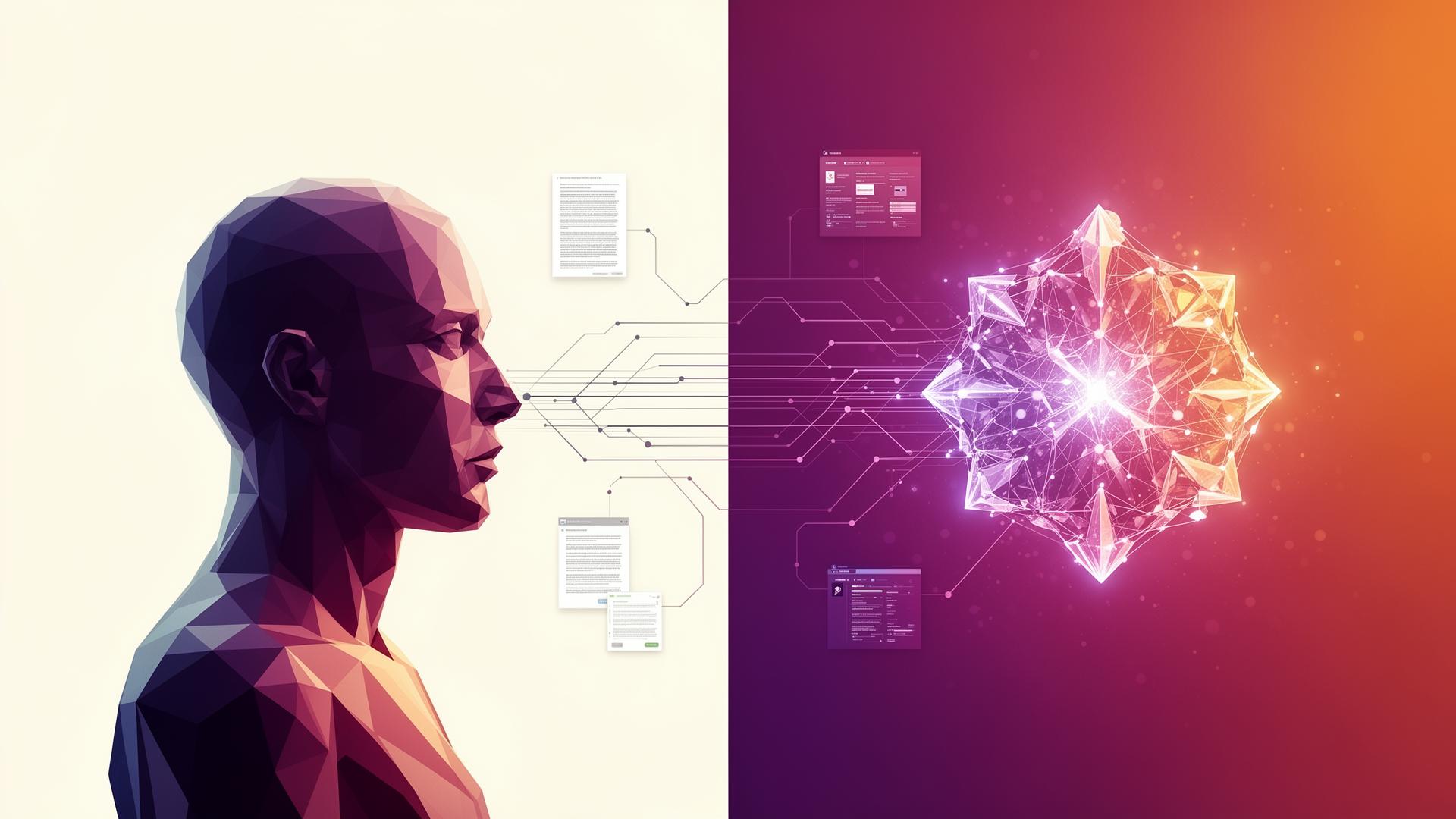
The problem that I see appearing is that these agents don't have the same brain wiring as us.
Agents don't feel trust, they calculate it. Where humans respond to brand storytelling or perceived value, agents evaluate performance, API uptime, data structure, and security infrastructure. This is a completely different discipline; I'm not sure if this concept has been coined yet but for simplicity sake I will call it Calculated Trust in this article.
A company could have a team of the worlds best marketers, top G2 rankings, and strong conversion rates (with human buyers), and still be completely invisible when the agents are making the first cuts. This won't show up in the traditional numbers/data which will initially leave companies confused.
What I see becoming obsolete
Landing pages have been optimized for customer experience. But Pew Research found that when an AI summary appears in search results, users click traditional results about half as often (this is going to continue trending this direction). We're being intercepted from the start, but agents never needed to reach your page anyway.
Demos assume a human has the attention span to give you 30 minutes. Documentation and SDKs are becoming the primary evaluation channels for agents when reaching SaaS products. AI agents don't even have the ability to consume your demo.
Brand awareness has always been a shortcut to trust and was something I was taught about heavily in college. When an AI agent reports back to you with a shortlist of SaaS products to consider, it was not taking brand awareness into account. The recognition companies have built for humans will not connect the same with agents; this will be something lots of companies will realize very soon.
My Thoughts for the Future
Perceived Trust isn't just going to disappear. Humans are still the ones signing the contracts at the moment, and the ones using the software. But that Perceived Trust is incomplete if there isn't a layer of Calculated Trust that comes before it.
Semrush's 2025 research found that visitors arriving through AI search convert at 4.4 times the rate of traditional organic visitors. These are high-intent buyers who were qualified by the AI before it even reached you. Currently, only 37.2% (this number is constantly growing) of marketing teams are actively optimizing for AI search visibility.
Beyond the search, your documentation quality, API reliability, and data structure are no longer just product concerns. They are what makes or breaks whether an agent will recommend you to potential customers. That is something I haven't heard spoken about much yet, and I think will be a big differentiator between successful and unsuccessful marketing efforts.
The marketing cheat-sheet is updating quickly and is no longer being written by those with the most experience; rather it is those who are quickest to adopt the changes.
If an AI agent selects your product and delivers value before a human ever consciously chose it, did your marketing work? Or did your product do the marketing for you?
I honestly think it is both, those who take both into account will be writing the instructions for successful marketing moving forward.
Perceived Trust got you where you are. Calculated Trust is what will keep you going.
These are my observations, it is not meant to draw conclusions. All observations and opinions were formed by me; composition and research was assisted by AI. I would genuinely love to hear from people further into their careers on where you think this is going and what differing opinions you may have.
Sources
- G2 2025 AI Agents Insights Report
- Pew Research Center, 2025: AI Summaries and Click Behavior
- Semrush, 2025: AI Search Traffic and Conversion Study
- On Marketing, Emerging Trends in Answer Engine Optimization 2025
- The Drum, November 2025: The B2A Revolution
- SaaS Simply, 2025: AI as the New Customer, Rethinking SaaS for Agentic Buyers